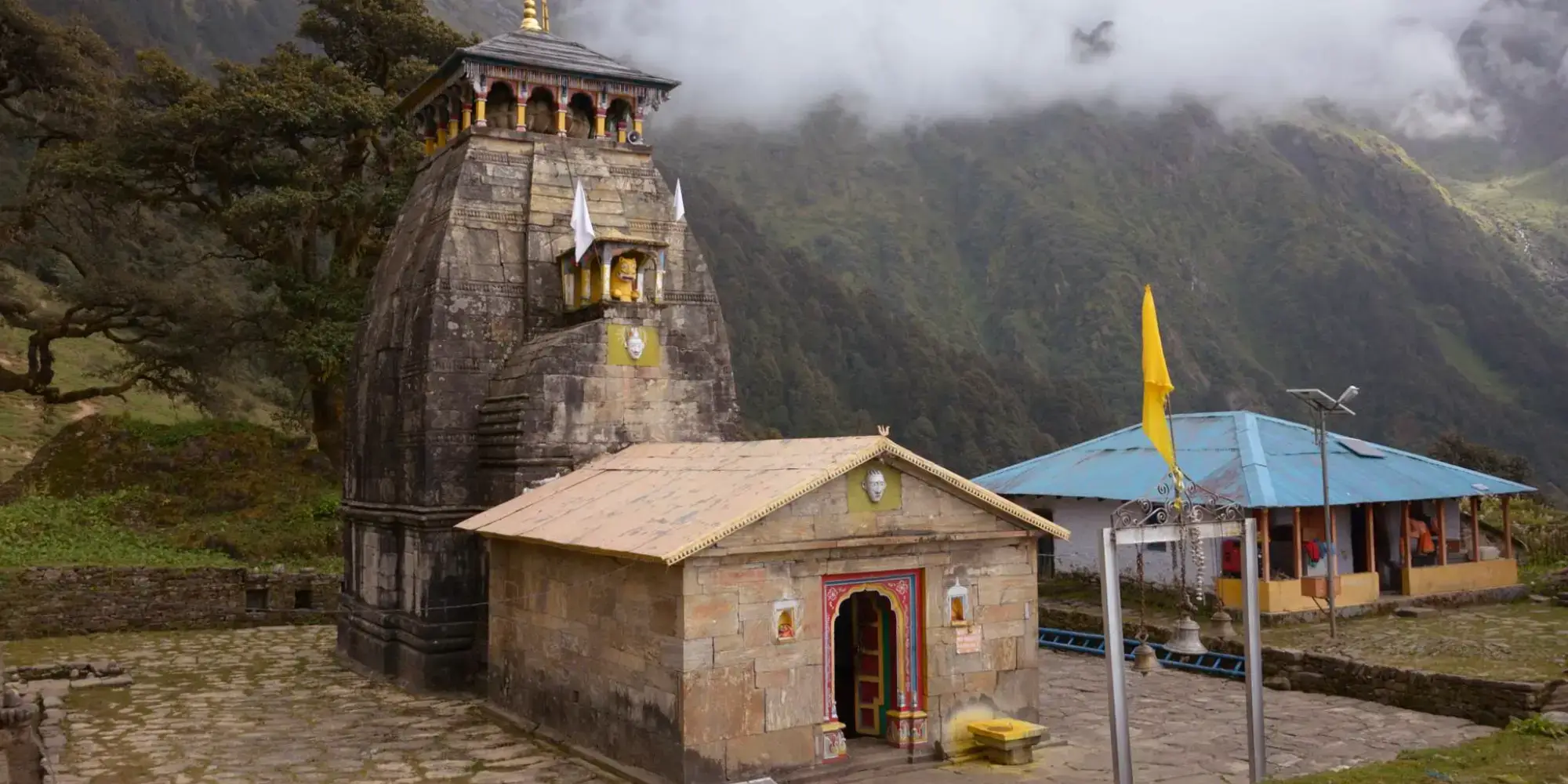
Panch Kedarnath, meaning "Five Kedar," refers to five ancient and revered Hindu temples dedicated to Lord Shiva, located in the majestic Garhwal Himalayas of Uttarakhand. These sacred shrines hold immense spiritual significance and are believed to represent different body parts of Lord Shiva, who took the form of a bull to escape the Pandavas after the Kurukshetra war.
The five temples are Kedarnath (torso/hump), Tungnath (arms), Rudranath (face), Madhyamaheshwar (navel), and Kalpeshwar (hair/matted locks). Among these, Kedarnath is the most prominent, being one of the twelve Jyotirlingas and part of the Char Dham pilgrimage. Tungnath holds the distinction of being the highest Shiva temple in the world at 3,680 meters altitude.
The Panch Kedarnath Yatra is a challenging yet spiritually rewarding pilgrimage that takes devotees through breathtaking Himalayan landscapes, ancient forests, alpine meadows, and high mountain passes. Each temple requires trekking ranging from easy 2km walks to strenuous 24km treks through rugged terrain. The journey tests physical endurance while offering profound spiritual experiences and unmatched natural beauty.
Completing the entire Panch Kedarnath circuit is considered highly meritorious in Hindu tradition and is believed to grant moksha (liberation). The yatra season runs from May to October, with temples remaining closed during winter months due to heavy snowfall. Whether you're a devout pilgrim seeking spiritual fulfillment or an adventure enthusiast combining faith with trekking, the Panch Kedarnath Yatra offers an unforgettable Himalayan experience.
3,583m (11,755 ft)
Main temple among Panch Kedar, one of 12 Jyotirlingas, dedicated to Lord Shiva
3,680m (12,073 ft)
Highest Shiva temple in the world, part of Panch Kedar, accessible via Chopta
2,286m (7,500 ft)
Face of Lord Shiva worshipped here, most challenging among Panch Kedar
3,497m (11,473 ft)
Navel part of Lord Shiva, surrounded by Chaukhamba peaks
2,200m (7,217 ft)
Hair (Jata) of Lord Shiva, only temple accessible throughout the year
All 5 temples - Kedarnath, Tungnath, Rudranath, Madhyamaheshwar, Kalpeshwar
Duration: 12N/13D to 14N/15D
Best For: Spiritual Seekers, Trekkers
Two most accessible Kedars with helicopter option for Kedarnath
Duration: 6N/7D to 8N/9D
Best For: First-time pilgrims
Trekking-focused itinerary covering difficult routes to all temples
Duration: 14N/15D to 16N/17D
Best For: Adventure Enthusiasts
Comfortable pace, helicopter for Kedarnath, only accessible temples
Duration: 8N/9D
Best For: Senior Citizens
May to June
Best time with pleasant weather. Temples freshly opened. Snow on higher trails. Ideal for yatra.
July to August
Heavy rains, landslides, trail damage. Avoid this period for safety reasons.
September to October
Post-monsoon clarity, clear views, less crowded. Second best time for yatra.
Airport: Jolly Grant Airport, Dehradun (30 km)
Flights from Delhi. Then taxi to Rishikesh (25 km). Base points: Guptkashi, Chopta, Ransi.
Stations: Haridwar (220 km), Rishikesh (210 km)
Well-connected from major cities. Taxis/buses to base points (Guptkashi, Chopta).
Route: Delhi → Rishikesh → Guptkashi/Chopta
NH58, NH7. State buses, private taxis available. Road journey scenic but long (12-14 hrs).
Best time: May to June, September to October. Temples close during winter (November-April)
Kedarnath requires 16km trek or helicopter. Book helicopter tickets in advance (₹3,000-7,000)
Physical fitness essential - all temples involve trekking at high altitudes
Acclimatization important - spend a day at Guptkashi/Chopta before high-altitude treks
Carry warm clothes, raincoats, trekking shoes, walking stick, oxygen can (optional)
Medical certificate recommended for Kedarnath and Tungnath
Book accommodation in advance during peak season at Guptkashi, Chopta, Ransi
Complete circuit takes 12-15 days - plan accordingly with buffer days for weather
Panch Kedarnath refers to five sacred temples of Lord Shiva in Garhwal Himalayas - Kedarnath (torso), Tungnath (arms), Rudranath (face), Madhyamaheshwar (navel), and Kalpeshwar (hair). According to legend, these represent different body parts of Lord Shiva.
Complete Panch Kedarnath circuit requires 12-15 days including buffer days for weather and acclimatization. If visiting only Kedarnath and Tungnath (most accessible), 6-8 days are sufficient.
May to June (opening season) and September to October are ideal. Temples remain closed from November to April due to heavy snowfall. Monsoon (July-August) should be avoided due to landslide risk.
Rudranath is considered most difficult requiring 20km trek through dense forests and steep ascents. Madhyamaheshwar also involves challenging 24km trek. Kalpeshwar is the easiest, accessible by road almost to the temple.
Helicopter service is available only for Kedarnath from Phata/Sersi/Guptkashi (₹3,000-7,000 one way). Other four temples require trekking. Helicopter booking: www.uttarakhandhelicopter.in
Kedarnath: Moderate (16km), Tungnath: Easy-Moderate (3.5km), Rudranath: Difficult (20km), Madhyamaheshwar: Difficult (24km), Kalpeshwar: Easy (2km). Altitude and weather add to difficulty.
Senior citizens can visit Kedarnath (via helicopter) and Kalpeshwar comfortably. Medical fitness certificate recommended. Tungnath possible with help. Rudranath and Madhyamaheshwar not recommended for elderly due to difficult treks.
Essentials: Warm clothes (layers), raincoat, trekking shoes, walking stick, torch, first-aid kit, medicines, ID proof, portable charger, dry fruits/energy bars, water bottle, oxygen can (optional).
Fill in your details and our travel experts will create a customized pilgrimage itinerary